
Does Asbestos Awareness Training Allow You to Work With Asbestos? Completing Asbestos Awareness Training is important for many people who work in older buildings. However, there is a potentially dangerous misunderstanding surrounding what this type of training actually qualifies someone to do.
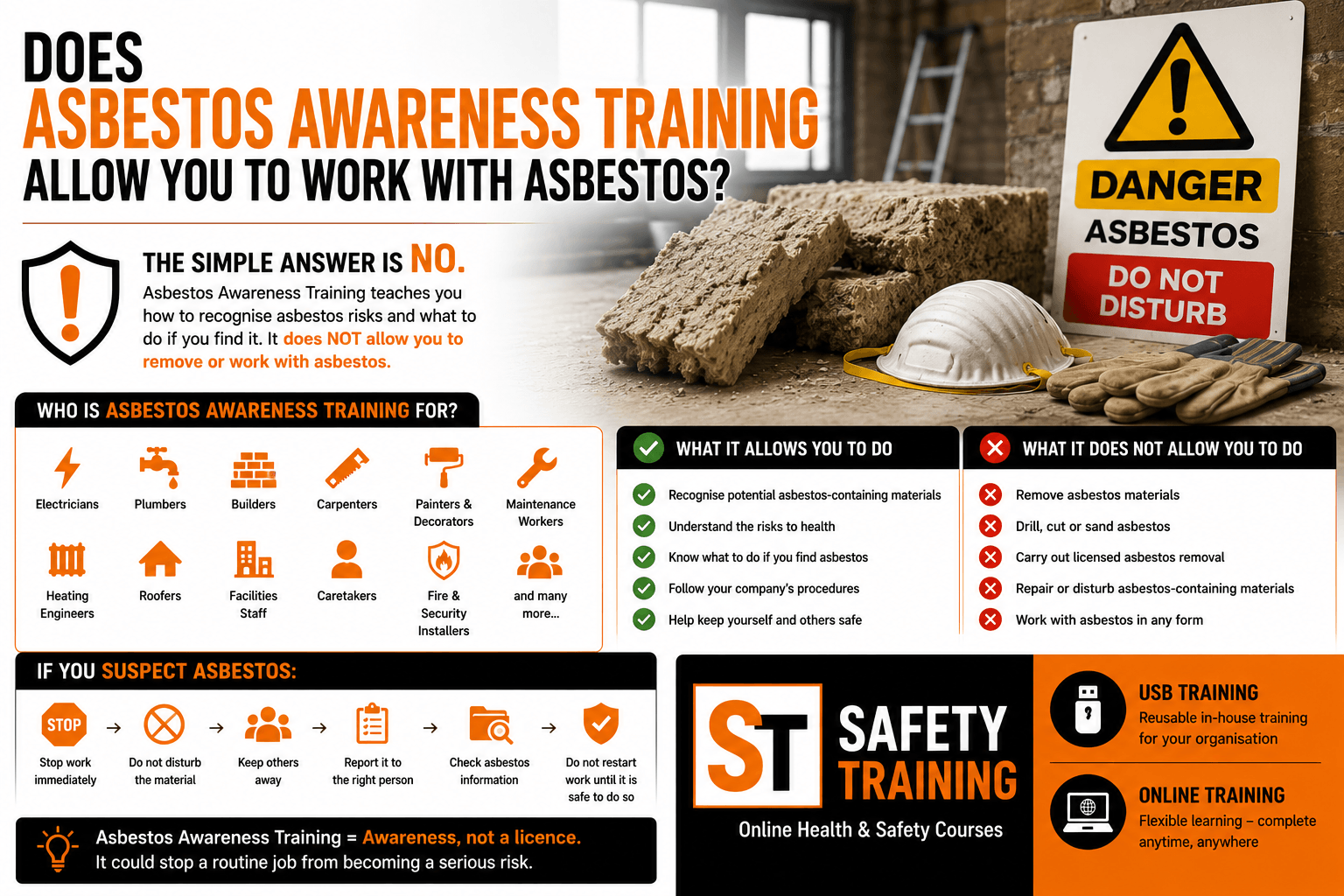
Does Asbestos Awareness Training allow you to work with asbestos?
The simple answer is no.
Asbestos Awareness Training is designed to help workers avoid accidentally disturbing asbestos-containing materials. It does not train or authorise someone to remove asbestos or intentionally carry out work that will disturb it.
Understanding this distinction is particularly important for employers, contractors and tradespeople working in buildings constructed or refurbished before 2000.
What Is the Purpose of Asbestos Awareness Training?
The primary purpose of awareness training is exactly what its name suggests: awareness.
Workers need sufficient knowledge to recognise situations where asbestos-containing materials could potentially be present and understand what they should do if they encounter them.
Training typically helps employees understand:
- What asbestos is.
- Why asbestos can be dangerous.
- The health effects associated with exposure.
- Where asbestos-containing materials may be found.
- Activities that could accidentally disturb asbestos.
- What to do if suspicious materials are discovered.
- Why work should stop when appropriate.
The objective is prevention rather than teaching people how to work directly with asbestos.

Who Is Asbestos Awareness Training Intended For?
Awareness training is relevant to workers who could encounter asbestos during their normal duties.
This can include:
- Electricians.
- Plumbers.
- Joiners and carpenters.
- Painters and decorators.
- Heating engineers.
- Builders.
- Maintenance workers.
- Fire and security installers.
- Telecoms engineers.
- Roofing contractors.
- Facilities personnel.
- Caretakers and property maintenance staff.
These workers may not intend to work with asbestos, but their jobs can involve drilling, cutting, removing fixtures or accessing hidden parts of buildings where asbestos-containing materials could potentially be present.
Why Can Ordinary Maintenance Work Present a Risk?
Asbestos isn’t necessarily dangerous simply because it exists within a building.
The significant risk arises when asbestos-containing material is disturbed and fibres are released into the air.
Consider an engineer who needs to drill through a wall to install equipment.
The task itself might take only a few minutes. However, if the wall contains an asbestos-containing material, drilling into it could release fibres.
The worker therefore needs to recognise that the material could present a risk before drilling begins.
This is precisely the type of situation where asbestos awareness knowledge becomes valuable.
What Doesn’t Asbestos Awareness Training Allow You to Do?
Completing an awareness course does not mean a worker is suitably trained to intentionally disturb asbestos.
Awareness training alone does not qualify someone to:
- Remove asbestos-containing materials.
- Drill asbestos-containing materials.
- Cut or sand asbestos products.
- Repair damaged asbestos.
- Break asbestos sheets.
- Carry out licensed asbestos removal.
- Undertake specialist asbestos work.
Work involving asbestos requires appropriate assessment, controls and, depending on the activity and material involved, additional specialist training and potentially licensed contractors.
An awareness certificate shouldn’t therefore be treated as permission to work with asbestos.
What Should a Worker Do if They Suspect Asbestos?
One of the most important lessons of awareness training is knowing when not to continue working.
If a worker encounters a material they believe could contain asbestos, they shouldn’t simply make an assumption based on appearance.
Instead, they should follow their organisation’s procedures.
Depending on the circumstances, this may involve:
- Stopping the work.
- Avoiding further disturbance of the material.
- Preventing other people from unnecessarily entering the affected area.
- Reporting the concern to the appropriate person.
- Checking available asbestos information before work resumes.
Workers shouldn’t attempt to identify asbestos simply by looking at it.
What About the Asbestos Register?
For many non-domestic premises, information about known or presumed asbestos-containing materials should be available as part of the organisation’s asbestos management arrangements.
Workers carrying out maintenance or installation activities may need access to relevant information before starting work.
However, the existence of an asbestos register doesn’t remove the need for awareness.
Employees need to understand why they should check the information and recognise when their planned work could affect a potentially hazardous material.
Training and effective asbestos management therefore work together.
Buildings Constructed Before 2000
Asbestos was used extensively in UK construction before it was prohibited.
Consequently, buildings constructed or refurbished before 2000 should receive particular consideration when maintenance, installation or refurbishment work is planned.
Potential locations can include:
- Insulation materials.
- Ceiling products.
- Textured coatings.
- Cement products.
- Service ducts.
- Panels and boards.
- Pipework and heating systems.
- Roofing materials.
- Floor coverings.
This doesn’t mean every older building contains asbestos, nor that every material in an older building is hazardous.
It means workers should be aware of the possibility.
Can Experienced Tradespeople Still Benefit From Training?
Yes.
Experience in a trade doesn’t automatically mean someone understands asbestos risks.
A highly experienced electrician, plumber or maintenance engineer may be excellent at their profession but still require appropriate asbestos awareness knowledge.
It can be particularly important for younger employees who entered their trade long after asbestos use was banned. They may rarely encounter asbestos in new construction but could still work regularly in older properties where legacy materials remain.
Why Employers Should Make the Distinction Clear
Employers should ensure workers understand the limitations of their training.
Simply telling employees they have completed “asbestos training” can create ambiguity.
Someone could incorrectly assume that their certificate means they are permitted to carry out work involving asbestos.
Referring specifically to Asbestos Awareness Training and explaining its purpose helps make the distinction clearer.
The central message should be straightforward:
Recognise the potential risk, avoid disturbing the material and follow the correct procedure.
Flexible Asbestos Awareness Training
For businesses that regularly employ people who could encounter asbestos, having an accessible training method makes it easier to train new starters and provide refresher training.
Asbestos Awareness Training supplied on USB provides businesses with a reusable in-house training resource. The package includes training videos, question and answer test sheets, certificate templates and training record templates.
Alternatively, online Asbestos Awareness Training allows individual employees to complete their training remotely using an internet-connected device.
Both approaches provide businesses with a practical way of delivering awareness training without arranging a classroom course every time another employee requires training.
Final Thoughts
Asbestos Awareness Training is extremely important, but its purpose must be understood correctly.
It teaches workers to recognise potential asbestos hazards and avoid accidentally disturbing asbestos-containing materials. It does not qualify someone to intentionally work on or remove asbestos.
For employees carrying out maintenance, installation, repair or refurbishment activities, that distinction could prevent a routine job from becoming a serious exposure incident.
Good asbestos awareness isn’t about teaching employees how to handle asbestos.
It’s about giving them the knowledge to recognise when they should stop.
